
I attended a parent-teacher conference for little g yesterday. It was her very first one. She’s only 3 1/2 and sat so still, with her little hands gently folded on her lap and her head slightly lowered for almost the whole conference. I guess it’s weird when people are talking about you. She got a good report. The comparisons started to roll in-She’s just like her sister-easy going, polite, helpful and really knows her stuff. “I have no complaints”. 
So, the light conversation becomes about our family and “how did we do it, twice”. g’s teacher is a new-again mom. She has a child that’s a little over a year old and two much older siblings. Things change and was wondering about how these two girls learned so much at home.
I have been having trouble choosing topics for this blog. Her question forced me to find the root of the problem. There is an endless supply of fun learning that goes on here every day, so there should be an endless supply of blog posts, right?
I’ve also been coaching lots of new (to me, not to teaching) teachers. It’s been wonderful and really has forced me to refine what is important about the learning, teaching and leadership, in mathematics and just in general.
Long story short, I think I figured it out. It’s not really about the methods I use. It is so much more about my beliefs about how children learn and grow. Toni (my forever mentor and coach) taught us early on about this and I feel like I have been digging deep into everyone’s beliefs lately. This fall, I have embarked on “uncomfortable journeys” with new colleagues that will help all of us learn more about engaging young people in the art of learning. Just an aside-I view “uncomfortable” as a really positive thing…
So, here are many of my current beliefs. Hopefully in naming them, I can just throw future posts up here and you might understand where I am coming from.
- Children can and will learn a whole lot on their own, as long as learning opportunities are available.
- Learning opportunities cannot be either “just-right” or well-designed without:
- a deep understanding of the content at hand, including how ideas relate to each other, AND,
- an understanding of about where a child is developmentally.
- Time needs to be set aside for learning opportunities that develop ideas well before they need to be used or applied as a strategy independently. (In some cases, I’m talking years!)
- If you think about an idea developing over a span of a year or more, little learning opportunities can be tucked into your days constantly. SO, patience is key.
- Teaching kids how to think–how to wonder, how to ask questions, how to connect ideas and how to reflect on their thinking-is far more important than telling kids what they should think or how they should apply an idea or strategy.
- Autonomy, both social and intellectual, are my ultimate goals for every learner.
- Kids learn more effortlessly in the moments that are fun and meaningful.
There is NO POSSIBLE way that the kids would be where they are if I directly taught every single thing that they know to them. Quite frankly, there is just not enough minutes in the day for that!
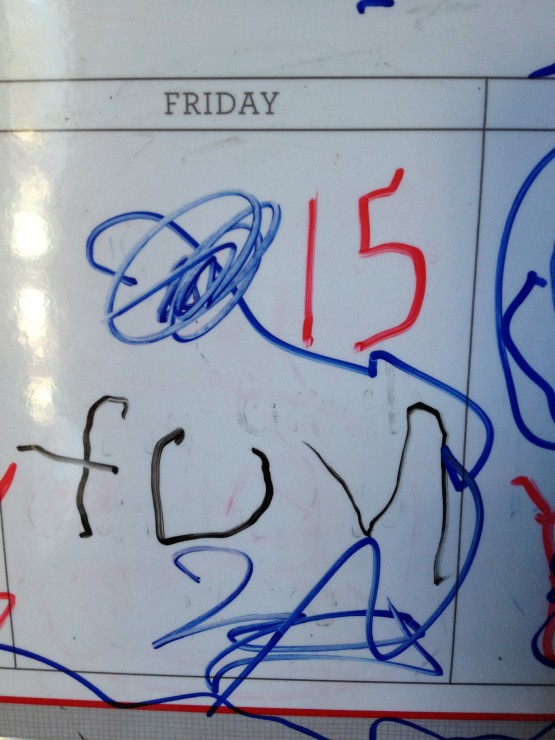
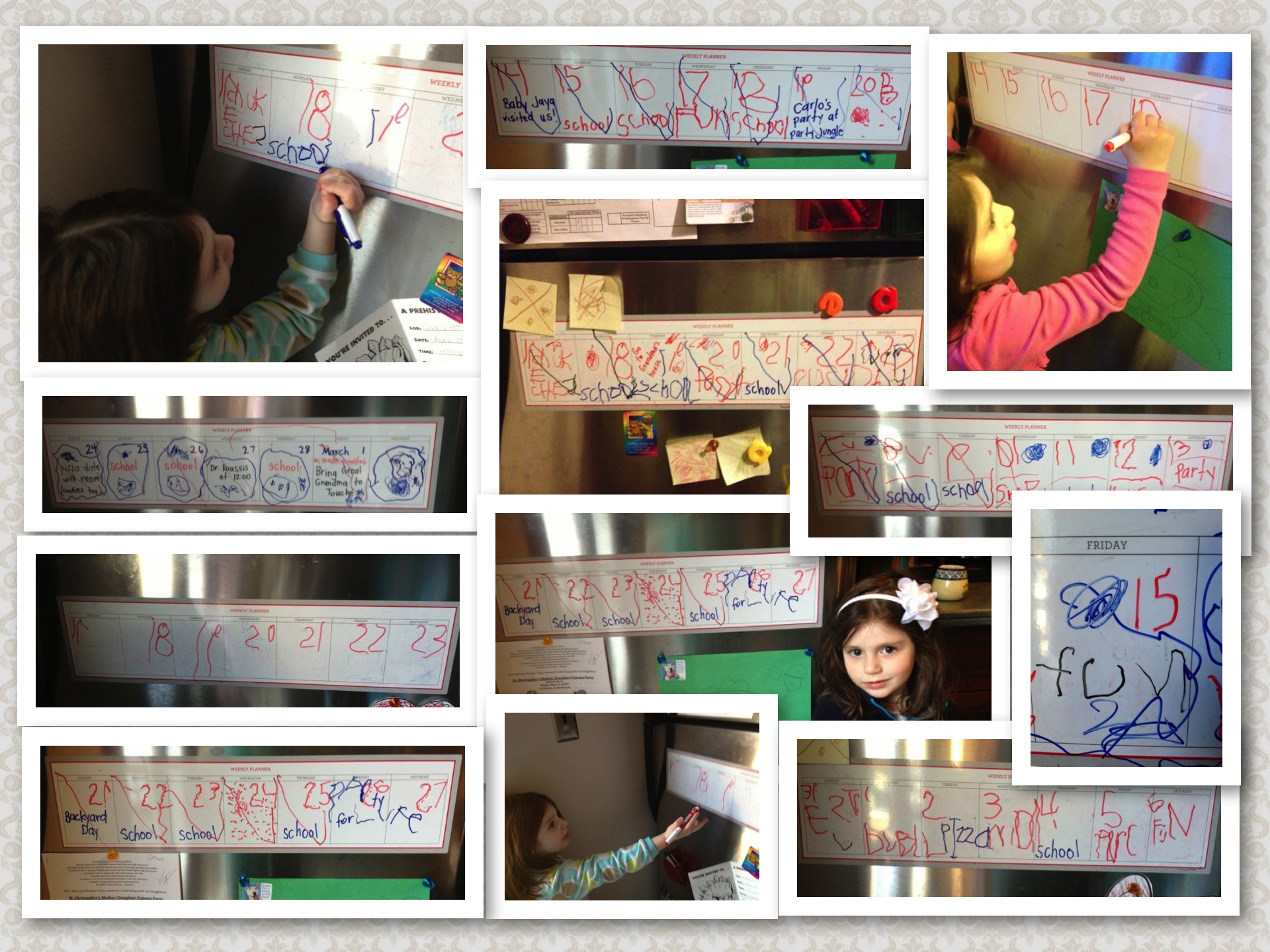
To go full circle, and link back to the PT conference, I caught myself saying, “Well, I started to introduce/point out/watch movies with isolated written words as soon as they could sit in the boppy chair. I just wanted them to know that the words we say can also be written in print and I expected that they would read in about 3 years from then.” I wasn’t sure if I should keep going, but in my usual style, I kept talking…”When I made coffee holding the baby on my hip I’d narrate life like, ‘I am going to make four cups of coffee. Let’s measure the water. The water reached the fourth line! Now let’s put four scoops of coffee into the machine, ready? 1, 2, 3…’I hope that you get the idea.” I’m not quite sure it was the answer she was expecting.
I suppose what I am trying to say is that what and how your kids learn depends on your beliefs about how they will learn and when they expected to actually know things. I could write numerous posts on this, I guess that’s the simplest way I could say it!
And that’s it. I’m going to click publish before I change my mind or go back and revise what I’m thinking…there’s no time for that either! Hope to write to you again soon.
 bigglittleg.com